The Legend of the Ancient Gothic Church Ruins of Zelemér
The ruins of the medieval church of Zelemér in Hajdúböszörmény are a remnant from the Árpádian era and are impressive even in their “ruin” state.
Our Tip
Accessibility Tools
Are you looking for something to do today? Well here’s what’s hot right now. Only the best things to see and do while in Debrecen over the next week and beyond, upcoming events that will stir your emotion, you will never want to leave after your Debrecen Experience.
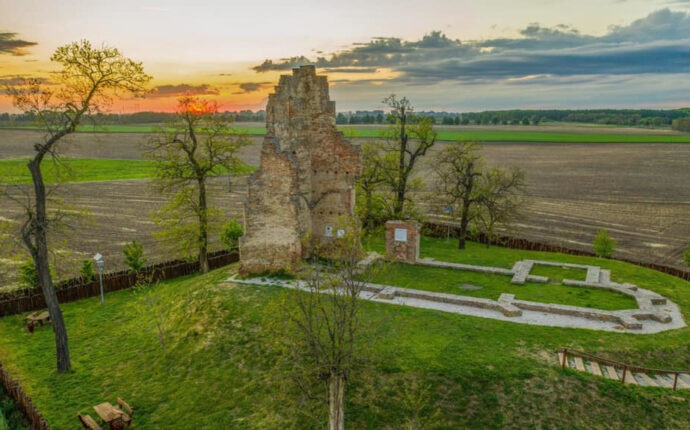
The ruins of the medieval church of Zelemér in Hajdúböszörmény are a remnant from the Árpádian era and are impressive even in their “ruin” state.
The ruins of the medieval church of Zelemér in Hajdúböszörmény are a remnant from the Árpádian era and are impressive even in their “ruin” state.
The origins of the building are linked to the decree of Stephen I, also known as King Saint Stephen, which said that every tenth village should build a church. As a result, the first Romanesque church of Zelemér was built. In subsequent years during the Tartar invasion, many settlements were depopulated and churches collapsed. What remains of the church, which can still be seen today, was constructed around 1310.
It was a medieval church of unusual size, built in a Gothic style, and in all likelihood would have been decorated in the style of the times. While the decoration has been lost, the masonry, scale, and architecture still impress. The church would probably have had gothic windows, and inside, in a manner typical of the architecture of the time, the building would have been adorned with a Gothic carved vault.
(more…)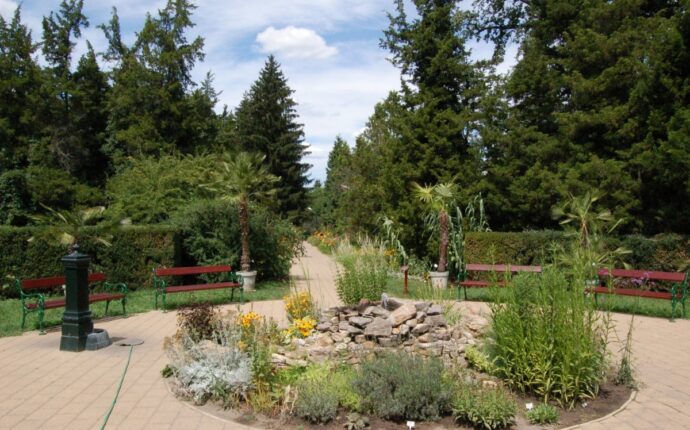
The Botanical Garden of the University of Debrecen, a natural wonder would be an excellent destination for the long weekend ahead.
With the arrival of Spring everyone longs to be outdoors, and although epidemiological measures significantly limit when and where we can go, there are attractions near us that can be visited with the necessary regulations.
(more…)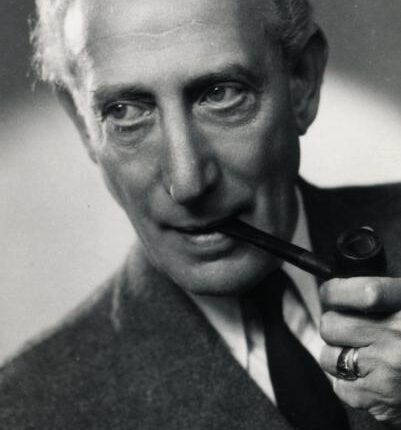
After graduating from the Budapest University of Technology, where he studied architecture, István Sajó went on to work in Dortmund, Germany for a few years before departing to the United States.
After graduating from the Budapest University of Technology, where he studied architecture, István Sajó went on to work in Dortmund, Germany for a few years before departing to the United States.
(more…)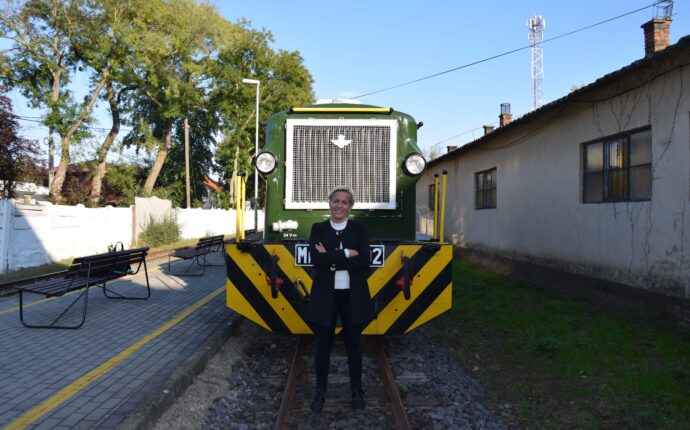
This time , Hajnalka Makóné Fogarasi, the managing director of the Zsuzsi Forest Railway, answered our questions.
This is a difficult year this year, especially now that theaters, cinemas, museums and restaurants are still closed, events are lagging behind and curfews are making it difficult for us to move around. We look forward to moving out of home again soon and traveling for a long domestic weekend or a smaller foreign vacation. Until then, all we have to do is tour at home and explore our own city, Debrecen, with a slightly different eye.
(more…)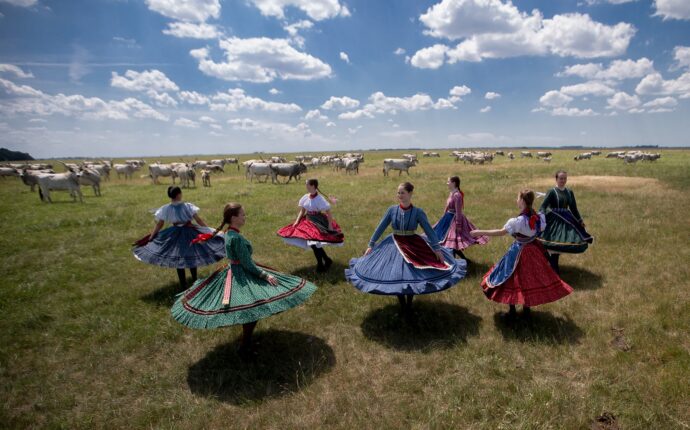
Over the centuries, Debrecen has become famous for many things. The city was known throughout the continent for its famous fairs and schools, the Reformed Great Church and even its double sausage. However, if we talk about culture, we must mention traditional folk dance and the Hajdú Folk Dance Ensemble of Debrecen.
Debrecen was built on trade. The city is located at the crossroad of the east-west salt road and the ancient north-south trade route, connecting the ports of the Aegean and Baltic Seas.
Over the centuries, Debrecen has become famous for many things. The city was known throughout the continent for its famous fairs and schools, the Reformed Great Church and even its double sausage. However, if we talk about culture, we must mention traditional folk dance and the Hajdú Folk Dance Ensemble of Debrecen.
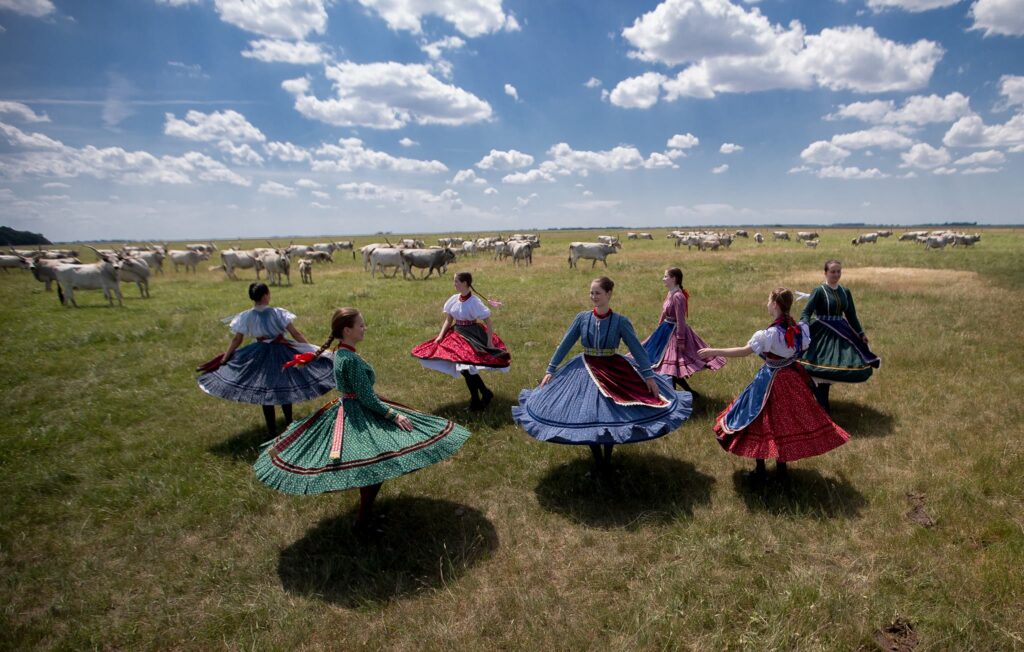
The predecessor of the Hajdú Folk Dance Ensemble of Debrecen was founded on 1st September 1953. István Zámbori, the director of the Lajos Kossuth Cultural House of Builders founded the dance ensemble under the name of the Builders’ Folk Dance Group (Építők Népi Tánccsoportja).
The year of 1960 was a turning point in the life of the group. Gyula Varga, an ethnography and dance research scientist, teacher and choreographer, started to lead the dance ensemble independently. It was time when they realized that the tradition and culture lives not only in its language, but also in its songs, music and dance and it needs to be maintained, saved for prosperity.
During 5 years of his professional leadership Varga opened new artistic-stylistic and methodological channels in the life of his ensemble. The group not only presented the original folk dance processes, but also showed dance in the spirit of new choreographic trends. From April 30th, 1966. László Kardos, an excellent folk dance teacher, took over the leadership of the dance group.
The Hajdú Folk Dance Ensemble of Debrecen started to win many awards including Csokonai Award (1984), Ferenc Kölcsey Award (1998), Territorial Prima Primissima Award, (2007), Mihály Csokonai Vitéz Community Award (2010), Ferenc Kölcsey Scholarship (2010), Pro Urbe Award (2014) and Hungarian Heritage Award (2014).
At the meeting of the Hajdú-Bihar County Securities Depository Committee held on the 11th May 2017 the work of the Hajdú Folk Dance Ensemble of Debrecen was declared as of county value. In the same year, the dance ensemble received a Martin György Memorial Plaque for the third time.
The foundation of the dance ensemble was established in November 1990. One of the most important tasks to-date is the operation of the dance ensemble, and the management of its art school, which supports the folk dancing activity of its adult groups, as well as for the youth and children.
Dance lovers can learn more about the ensemble and follow their performances on Facebook or via their website.

In Debrecen, many cozy cafes and confectioneries entice you to relax, to have intimate conversations, to do “sweet nothing”. Read on to learn about the best places to go.
In Debrecen, many cozy cafes and confectioneries entice you to relax, to have intimate conversations, to do “sweet nothing”.
In addition to the “‘kürtőskalács” you can taste home-made strudels and other specialities from the county and Hajdúság, or even the cake of Hungary, an award given each year to the best the country has to offer according to an expert panel of judges.
(more…)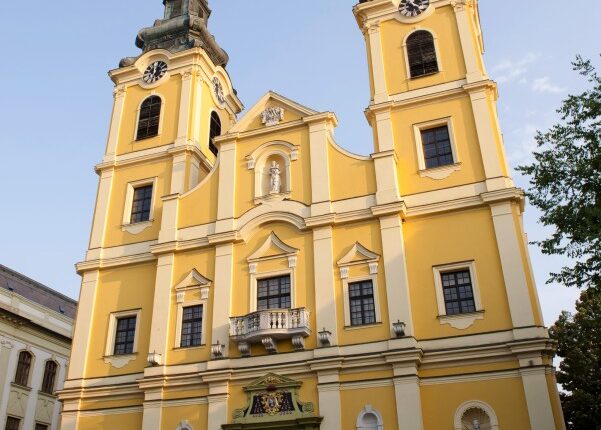
The construction of the church and convent of St. Anne’s Cathedral began in 1721 at the expense of Count Imre Csáky. Csáky wanted to exemplify the power of Catholics before “Calvinist Rome” with a representative church.
St. Anne’s Cathedral (Szent Anna-székesegyház) in Debrecen is the seat church and parish church of the Diocese of Debrecen-Nyíregyháza.
One of the conditions for the city to receive the free royal city title more than 300 years ago was that the city designate land for the Catholic church. The parish has been operating in Debrecen since 1716. The proponent of the church construction was Count Imre Csáky, – the Archbishop of Kalocsa, and Bishop of Oradea and Chief Lieutenant of Bihor County.
(more…)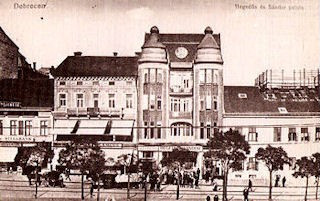
While nothing remains of the former palace of Hegedűs and Sándor at number 34 Piac street, you can still visit the site and marvel at the surroundings.
While nothing remains of the former palace of Hegedűs and Sándor at number 34 Piac street, you can still visit the site and marvel at the surroundings.
If we turn at the former Csanak Palace, – built for the famous merchant, József Csanak, while standing on the corner of the former Kádas Street (today Arany János Street) and Piac Street, and look across the street, you will see a bookstore. This site is where the palace of Hegedűs and Sándor once stood (shown below).

Hungary’s largest rural city stands out in terms of gastronomy. In addition to the Debrecen sausage which has long been declared as Hungarian speciality (Hungaricum), there are many others.
Hungary’s largest rural city stands out in terms of gastronomy. In addition to the Debrecen sausage which has long been declared as Hungarian speciality (Hungaricum), there are many others.
(more…)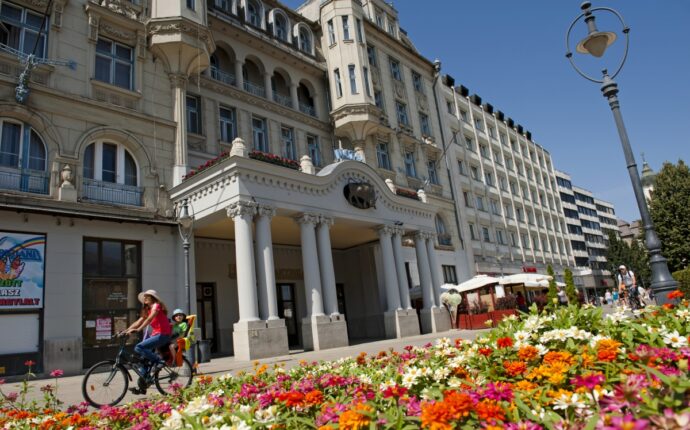
Overlooking Kossuth Square, on the corner of Bajcsy-Zsilinszky and Piac streets is Debrecen’s most famous hotel, Hotel Aranybika. Its fame is, to a large extent, down to its long history and location.
Overlooking Kossuth Square, on the corner of Bajcsy-Zsilinszky and Piac streets is Debrecen’s most famous hotel, Hotel Aranybika. Its fame is, to a large extent, down to its long history and location.
(more…)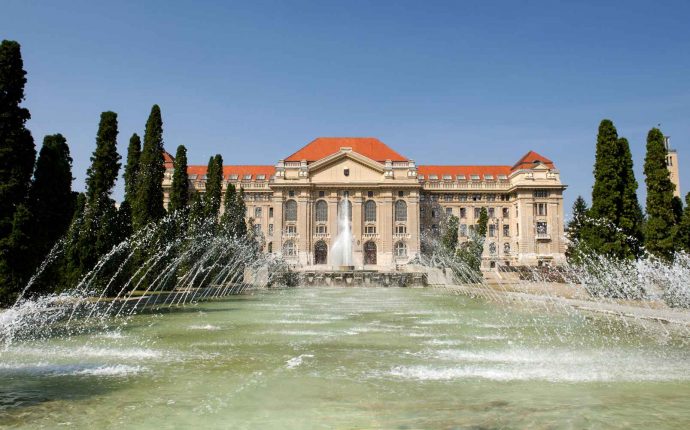
Undoubtedly, one of the most beautiful buildings in Debrecen is the main building of the University of Debrecen.
Undoubtedly, one of the most beautiful buildings in Debrecen is the main building of the University of Debrecen. The neo-baroque building in Nagyerdő (Great Forest) is unique in terms of size, appearance and architectural solutions, and is not only the most beautiful university building in Debrecen, but also in the country and in Europe.
(more…)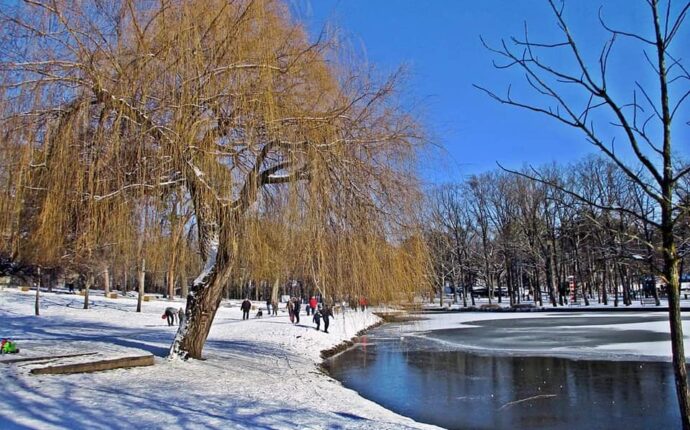
For many, January is synonymous with long, wet cold and short gray days that seem to take forever to pass and the nights long and foreboding. Even though the winter holidays are over, the spring is still far away. However, there are good ideas to ward off winter melancholy.
For many, January is synonymous with long, wet cold and short gray days that seem to take forever to pass and the nights long and foreboding. Even though the winter holidays are over, the spring is still far away. However, there are good ideas to ward off winter melancholy.
(more…)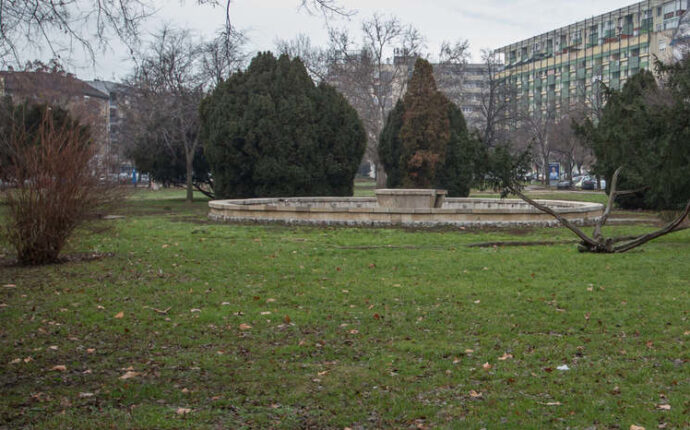
Petőfi Square was one of the most impressive parts of Debrecen before World War II. The emblematic building of the courthouse, the district court, the Deák Ferenc Street Synagogue and the Royal Hotel were located here. Most of these were lost during the bombings of World War II.
Before World War II, Petőfi Square was one of the most impressive parts of Debrecen. The emblematic building of the courthouse, the district court, the Deák Ferenc Street Synagogue and the Royal Hotel were all located here. However most of these were lost during a series of bombings during the war.
(more…)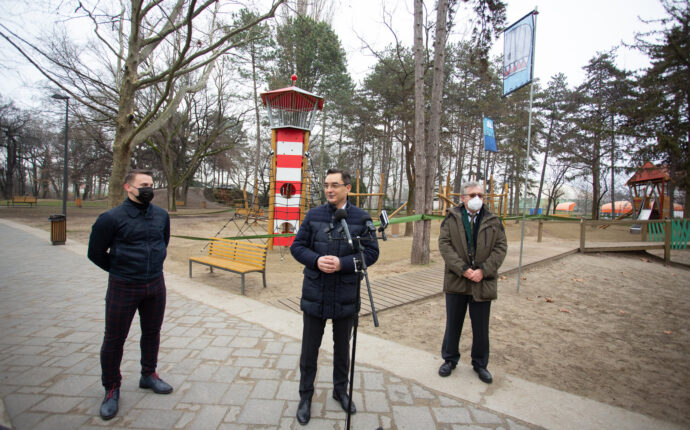
Located in the heart of the Great Forest, the playground is a spot loved by kids of all ages and parents alike. While the children play, parents can relax and enjoy the surroundings while listening to their children’s laughter and the inescapable sound of water from the nearby Lake Békás fountains.
Located in the heart of the Great Forest, the playground is a spot loved by kids of all ages and parents alike. While the children play, parents can relax and enjoy the surroundings while listening to their children’s laughter and the inescapable sound of water from the nearby Lake Békás fountains.
(more…)


