Old Town Hall: The Secret Place of the Hungarian Holy Crown
One of the most characteristic architectural monuments of the City of Debrecen, is the Town Hall, a classicist building which stands on Piac street.
Our Tip
Accessibility Tools
Are you looking for something to do today? Well here’s what’s hot right now. Only the best things to see and do while in Debrecen over the next week and beyond, upcoming events that will stir your emotion, you will never want to leave after your Debrecen Experience.

One of the most characteristic architectural monuments of the City of Debrecen, is the Town Hall, a classicist building which stands on Piac street.
One of the most characteristic architectural monuments of the City of Debrecen, is the Town Hall, a classicist building which stands on Piac street.
The building was home to elected city officials including the judiciary, and other officers of elected bodies. The Old town hall has been characterized by frugality for centuries. Until the 19th century, the city spent relatively little on “ordinary” (city-owned) houses and their decoration.
The first town hall was built in 1531 by expansion from the construction of single-storey residential buildings over the centuries. In 1802, the city leaders wanted to build a new town hall, but due to lack of money, neither the plans ofMihály Péchy nor Ferenc Povolny was realized.
(more…)
Going North from the main square, towards the Main Railway Station, we cannot pass by Batthány Street without talking about some gems of the past.
Going North from the main square, towards the Main Railway Station, we cannot pass by Batthány Street without talking about some hidden gems and those lost to history.
Batthány Street is named after Count Lajos Batthyány (1807-1849) who was the first Prime Minister of Hungary, he was born in Bratislava, Slovakia and was later executed by firing squad in Pest on 6 October 1849, the same day as the 13 Martyrs of Arad.
Until the middle of the 19th century, the street was called Kis-Varga Street, and then “Harmincados köz” (“thirtieth” in English). The name used to refer to the fact that the royal tax office was located there.
(more…)
Learn about the history of the old town square of Debrecen. Kossuth Square through the ages.
There are many wonderful travel guides about Debrecen, but few about the important places of this city in the context of history. This article focuses on the history of the old town square of Debrecen.
Over time Debrecen has changed, just like any city, as to how much is open to interpretation and your own perspective. The tram lines have been a long term fixture of Kossuth Square, which was once a green oasis. Gardeners created plant islands in every corner of the square.
Dominating the Kossuth Square is the most famous symbol of the city, the Reformed Great Church. Before it was built, in the 13th Century, St. Andrew Church stood in its place, built by the Dósa family. Later in the 16th century, St. Andrew Church was destroyed by fire and rebuilt again in the gothic style.
(more…)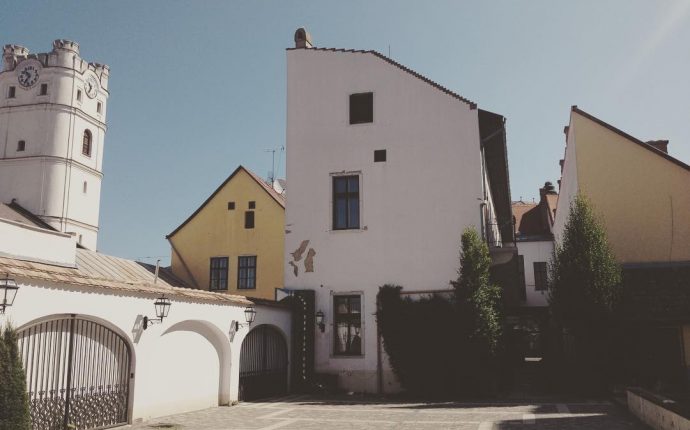
The building is most famous for being the home of Magda Szabó who is revered in Hungary and internationally as a towering literary figure of the 20th century
The main street of Debrecen, known as Piac street, was once lined with trading houses, and it remained a centre of trade and for hundreds of years. The very first multi-floor dwellings of the town were built here. While the buildings are of simple construction, their facades have many beautiful decorations that deserve special attention.
One of these buildings is the Rickl House at No. 39-41 on Piac Street. The great-grandfather of the world-famous author Magda Szabó (from her mom’s side), József Rickl, was a German merchant, he built this classicist building for his renowned supermarket and his family in the 1820s.
(more…)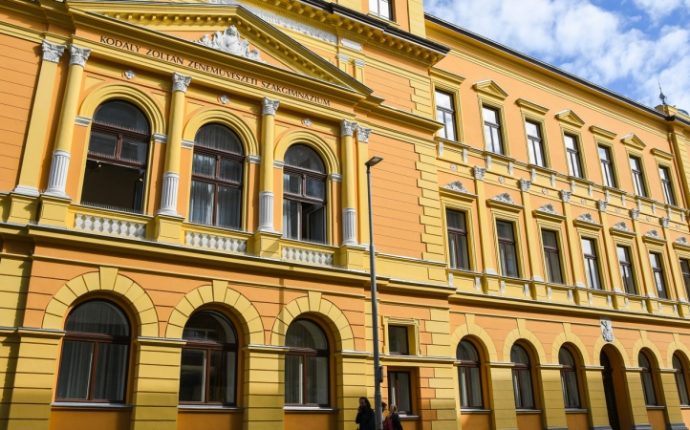
During the early 1800s, the musical life in Debrecen city reached new highs, in-part thanks to financial support for music-related initiatives.
The building bearing the name Zenede has a long illustrious history associated with music culture and music education, mostly because of the ties to the man that the building is named after, the composer and the children’s educator Zoltán Kodály.
Today the building is home to the Zoltán Kodály Vocational Secondary School of Music, a fitting legacy since he was deeply devoted to the importance of music in children’s education. He became world-famous for inventing a music teaching method that has been used ever since, all over the world to teach children music.
(more…)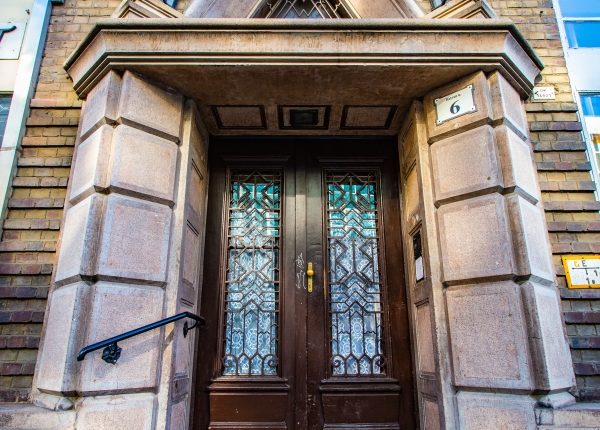
Every square meter of Debrecen’s downtown has something of a cultural and historical significance. If you want to get to know the city, you should open your eyes and discover its hidden treasures beyond the obvious sights.
Every square meter of Debrecen’s downtown has something of a cultural and historical significance. If you want to get to know the city, you should open your eyes and discover its hidden treasures beyond the obvious sights. To help you see beyond the obvious we have collected for you the most beautiful gates in Debrecen with the help of architect Attila Harangi and photographer Viktor Löki.
The emblem of Debrecen represents Puritan Classicism in Calvinist Rome. The largest Reformed Church in the country was built between 1805 and 1821 according to the plans of Mihály Péchy. The Reformed Great Church was built on the foundation walls of the medieval Gothic-style church of St. Andrew, which was completely destroyed in the devastating fire in 1802. The impressive gate ornament of the church reflects the ancient heritage of Debrecen. If you visit Reformed Great Church, take time to appreciate the massive copper handle with intricate symbols.
(more…)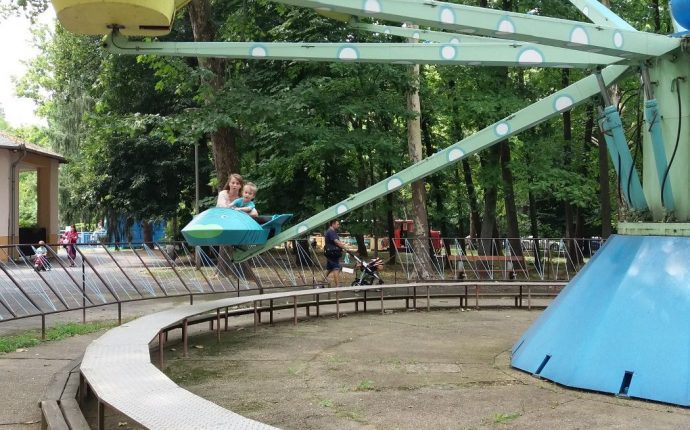
March 14th, marks the Jubilee Season of Debrecen Amusement Park, which has opened every day of the week from May 1st since the first opening back in 1960. Debrecen Amusement Park remains the only permanent Amusement park in Hungary.
March 14th, marks the Jubilee Season of Debrecen Amusement Park, which has opened every day of the week from May 1st since the first opening back in 1960. Debrecen Amusement Park remains the only permanent Amusement park in Hungary.
To embrace tradition, while also catering to those looking for new thrills, the repertoire will include both timeless classics and awesome new novelties.
In addition to the careful maintenance of park equipment, several rides have also undergone a visual overhaul and now await the season start in their full glory. Cherished for their great history and beautiful craftsmanship, the magnificent steeds of the Horse Carousel are now as good as new, and so is the Duck Train, a true family favorite.
(more…)
The country is most familiar with Debrecen as a “cívis” city, but in fact, many of the smaller settlements in the Great Plain used the term “cívis”.
The country is most familiar with Debrecen as a “cívis” city, but in fact, many of the smaller settlements in the Great Plain used the term “cívis”.
According to the Lexicon of Ethnography, the “cívis város” (“cívis city) is the “distinctive name of the great market towns of the Great Plain, which obtained or approached the status of free royal towns, but whose citizenship consisted mainly of peasant farmers”.
According to Árpád Kálnási, linguist, the “cívis” people were a so-called peasant citizen, but not only peasants but artisans also belonged to this group. The “cívis” people were engaged in agriculture and crafts, but in their spare time, they went to the theater and were enthusiastic donors. They did not produce more than was needed for their own use, and they only sold their products on the market when money was needed.
(more…)
The earliest known map of Debrecen is from 1750, which shows the town surrounded by a plank and gates. This map is important because it also contains street names of that time. A new online “street name” database shows street names now and in the past, which indicating the origins of street names in Debrecen.
The earliest known map of Debrecen is from 1750, which shows the town surrounded by a plank and gates. This map is important because it also contains street names of that time. A new online “street name” database shows street names now and in the past, which indicating the origins of street names in Debrecen.
Let see some interesting facts about the streets of Debrecen .
Over the years Piac Street has had many names including Piac Square in 1564, Ferenc József Road from 1898 to 1915 and the “Red Army Path” from 1990 until the end of the regime.
(more…)
If you know of Debrecen, even just a little, you would most probably think of images of the impressive Great Reformed Church dominating the central Kossuth Square and the Art Deco and socialism period buildings surrounding it. However, there is much more to Debrecen, so much to discover and celebrate in History.
If you know of Debrecen, even just a little, you would most probably think of images of the impressive Great Reformed Church dominating the central Kossuth Square and the Art Deco and socialism period buildings surrounding it. However, there is much more to Debrecen, so much to discover and celebrate in History.
See some of the most famous days to celebrate in Debrecen’s past:

The of the best things about Debrecen is that many of the top things to do in the summer are even better in winter. You can do them all year round making Debrecen a great destination all year round.
Winter is full of celebration, cheering off the seasonal blues, Debrecen is no different from any other city in this regards, with Christmas and new year celebrations aplenty. However, if you are looking to take a winter break outside of the celebration period there is still much to see and do.
One of the best things about Debrecen is that many of the top things to do in the summer are even better in winter. You can do them all year round making Debrecen a great destination all year round.
(more…)
“Your city is perfect only if it has a spa,”said Abu Syr, Arab historian.
“Your city is perfect only if it has a spa,” said Abu Syr, the Arab historian.
A possible explanation for the origin of the word “spa” is the healing power of water. Debrecen is indeed fortunate with aplenty of spas! Historically, the spa experience in Europe was centered on the “bath culture”, a patient would spend a few days or weeks in center like Debrecen using medicinal waters to treat or prevent certain illnesses.
In the 1950s, the spa experience was interpreted as a clinical activity but were rebranded as “beauty farms” took over later, using a variety of medicinal water therapies, along with strict exercise and diet.
Today, the modern spa experience is a pampering and pleasant stay in Debrecen and in a beautiful environment with healthy and tasty food. Water is still an important component of the spa experience, but the modern spa provides health services for body and soul.
In Debrecen, you can choose from spa treatments, “lifestyle programs”, and relaxing experiences in a wide range of spa and wellness hotels a selection of which are below.
(more…)
While advent begins at the end of November or the beginning of December, in Hungary Christmas really begins for children on the 6th December, this is because it is (Mikulás-nap) St.Nicholas day, the day when Santa visits Children throughout Hungary.
While advent begins at the end of November or the beginning of December, in Hungary Christmas really begins for children on the 6th December, this is because it is (Mikulás-nap) St.Nicholas day, the day when Santa visits Children throughout Hungary.
In preparation for this Advent and Christmas period, a number of popular treats are prepared in vast quantities, available everywhere from cukrászdák (confectionaries), and at the stalls at the Advent Christmas fairs located in bigger cities such as Budapest and Debrecen.
In what can only be described as a sweet tradition, the Beigli is consumed in vast quantities in the build-up to Christmas. The rolled cylinders of dough are more widely known as Christmas Roll or Poppy Seed roll or Walnut Rolls. They are named accordingly, with either poppy seed or a walnut filling and then baked. These sweet treats last for long periods and are mass-produced by Grandma’s across the country. It is a happily unavoidable treat and a sensation that is inseparable from the Christmas experience and memory here.
(more…)
Just like any other city, Debrecen has its own dark history with scandals, intrigues, violence and murder which make for interesting stories. A far cry from what today’s Debrecen which must be one of the safest cities in Hungary.
Just like any other city, Debrecen has its own dark history with scandals, intrigues, violence and murder which make for interesting stories. A far cry from what today’s Debrecen which must be one of the safest cities in Hungary. There are several interesting buildings and streets in the city that tell some scandalous stories.
Petőfi Square, the Little Chicago of Debrecen
Petőfi Square started to play an important role in the life of the city only in the second half of the 19th century, but before this time it was used as a dumping ground. With the construction of the railroad, it became popular, but it was never an upper-class neighbourhood, but rather the “entertainment center” of the working class. It was also called “Little Chicago”.
The Kossuth Hotel stood at the corner of what is now Elizabeth Street, operated as a reputable place at first. Later it was seen as a dangerous inn because if the guest did not pay, they would throw them out onto the street or search their wallet while he slept.
On the street known as Késes, (translates as Knife in English) located behind a 24 story building the street was probably named after the knife makers located there, but a far more interesting story arose that quickly became widespread, that it was named so because of stabbings there.
(more…)


